Lauryl alcohol (1-dodecanol, C₁₂H₂₆O) is a fatty alcohol with a slightly floral scent, extracted mainly from coconut or palm oil. Although its name suggests technicality, in practice it is a versatile, natural ingredient with emollient, surfactant and stabilizer properties – present in almost all creams, shampoos, detergents and pharmaceutical formulations.
In Vichemic – Lauryl Alcohol you will find an industry-standard product that meets purity standards and ensures the highest quality formulas integrating this raw material.
Natural source and chemical properties
Lauryl alcohol is an aliphatic, saturated fatty alcohol with a long 12-carbon chain (C₁₂H₂₆O). At room temperature, it exists in a solid or semi-solid state (melts at about +24 °C), insoluble in water, but well miscible with alcohols and organic solvents. It has a slight floral odor, which is due to its natural origin.
- CAS: 112-53-8
- EC no: 203-982-0
- Molar mass: ~186.33 g/mol
- Boiling point: about 259 °C
- Density: 0.8309 g/cm³
- Solubility: about 0.004 g/L in water; mixes well with ethanol and ethers
Main functions in formulations
- Emollient and softener – forms a protective layer, improving the glide and feel on the skin
- Emulsion stabilizer – increases the viscosity of emulsion formulas, preventing delamination
- Surfactant precursor – forms the base for lauryl sulfates (e.g. SLS)
- Foaming and dispersing agent – used in shampoos and detergents
Applications in industries
Cosmetics and skin care
In the formulation of hand creams, lotions, masks and conditioners – it provides a velvety feel and helps the skin retain moisture. You’ll also encounter it in dry and waxy formulas, thanks to its structural stability.
Detergents and cleaning products
As a precursor to anionic surfactants (e.g., sodium lauryl sulfate), lauryl alcohol drives dishwashing, laundry or shampoo products – known for creating foam and reducing surface tension.
Pharmacy and technical supplements
As an emollient in dermatological creams and ointment bases, it improves the application of the drug on the skin, stabilizes emulsions and aids in the transport of active substances.
Chemical and food industry
It is used as a solvent and additive in the production of synthetic surfactants, as well as in feed and food additives (e.g. as lauryl acid ester – E470).
Safety and environmental profile
- Low toxicity, but may cause irritation at higher concentrations
- Flammable – store in cool, ventilated areas
- Biodegradable
- Recommended use of protective measures: gloves, goggles, avoid overheating
Production mechanisms and trends
Lauryl alcohol is produced by hydrogenation of lauric acid, as well as by synthetic methods (e.g. Ziegler or Bouveault-Blanc). Organic trends promote sourcing from certified plant sources.
Trivia
- Naturally found in apples, beer and some cheeses, among others
- It forms the base chain in the construction of many modern emulsifiers
- Known in the chemical industry since the 1960s as an ingredient in children’s cosmetics
Summary
Lauryl alcohol is the foundation of modern performance chemistry – from emollients to surfactants. Its natural origin, functionality and safety make it a key industrial ingredient.
Check the quality and availability of the product at Vichemic – Lauryl Alcohol.
Zobacz także

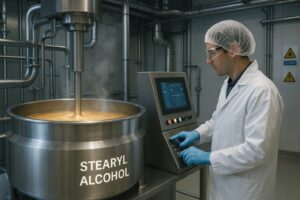
Stearic alcohol – a luxury emollient, stabilizer and secret ingredient of many industries
Stearic alcohol, also known as 1-octadecanol, is a long-chain saturated fatty alcohol with the formula C₁₈H₃₈O. Despite its technical-sounding name, it is one of the mildest and most desirable ingredients used in cosmetics, pharmaceuticals and the engineering industry. Its key properties – a soft, waxy texture, excellent emollient properties and a neutral fragrance – make […]
Read more 
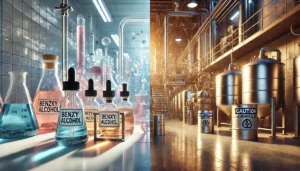
Benzyl alcohol – a mild solvent and preservative with a wide range of uses
Benzyl alcohol (CAS: 100-51-6) is a colorless liquid with a delicate, slightly floral odor. Known for its wide range of applications, it is used as a solvent, preservative and fragrance ingredient in the cosmetic, pharmaceutical, chemical and technical industries. Its mild toxicological profile and good solubility make it one of the most versatile solutions for […]
Read more Acrylamide – A key monomer for the water, wastewater and biotechnology industries
Acrylamide is a reactive, colorless monomer used on a massive scale in the synthesis of polyacrylamides and other engineering polymers. Its presence in a wide range of sectors – from water treatment to mining to biological laboratories – makes it an extremely important ingredient in modern industrial chemistry. Despite the need for special care in […]
Read more